
Healthy eating fails when advice ignores your work schedule, appetite, medicines, cooking habits, symptoms, or nutritional needs. A well-run Ayurvedic diet consultation turns broad principles into practical meals, routines, and follow-up steps while showing you where conventional medical or nutrition care is essential.
Key takeaways
- Share your symptoms, routine, medicines, allergies, and health goals before receiving diet advice.
- Use Ayurvedic principles to shape meals without treating dosha lists as universal prescriptions.
- Change one dietary variable at a time and track symptoms, energy, digestion, and weight.
- Seek evidence-based medical guidance for deficiencies, chronic disease, pregnancy, and persistent symptoms.
What an Ayurvedic Diet Consultation Examines Before It Recommends Food
Before recommending food, an Ayurvedic practitioner should build a clinical and practical picture rather than start with a universal dosha food list. An Ayurvedic diet consultation reviews:
- Health history, diagnosed conditions, allergies, current medicines, supplements, and relevant laboratory findings.
- Appetite and digestion, including hunger, bloating, reflux, nausea, stool frequency, constipation, diarrhoea, and food-related symptoms.
- Meal timing, portion sizes, sleep, work schedule, physical activity, hydration, and stress.
- Food preferences, cultural meals, budget, cooking facilities, ethical choices, and foods you already tolerate.
- Traditional frameworks such as Prakriti, Vikriti, Agni, and dosha patterns, alongside your age, season, occupation, and symptoms.
These frameworks guide traditional counselling; they are not substitutes for a diagnosis, blood test, or registered dietitian’s assessment. A responsible plan converts broad advice into workable choices: when to eat, how much to serve, what to prepare, and which symptoms to track.
Ask how the plan will protect adequate protein, fibre, total energy, calcium, iron, vitamin B12, and iodine. Removing dairy, grains, legumes, oils, or several food groups without suitable replacements can create deficiencies.
If powders, tablets, bhasma, or proprietary formulations are suggested, ask for the ingredient identity, dose, and contamination testing; “natural” does not rule out lead, mercury, or arsenic.
How Traditional Ayurvedic Frameworks Become an Individual Eating Plan
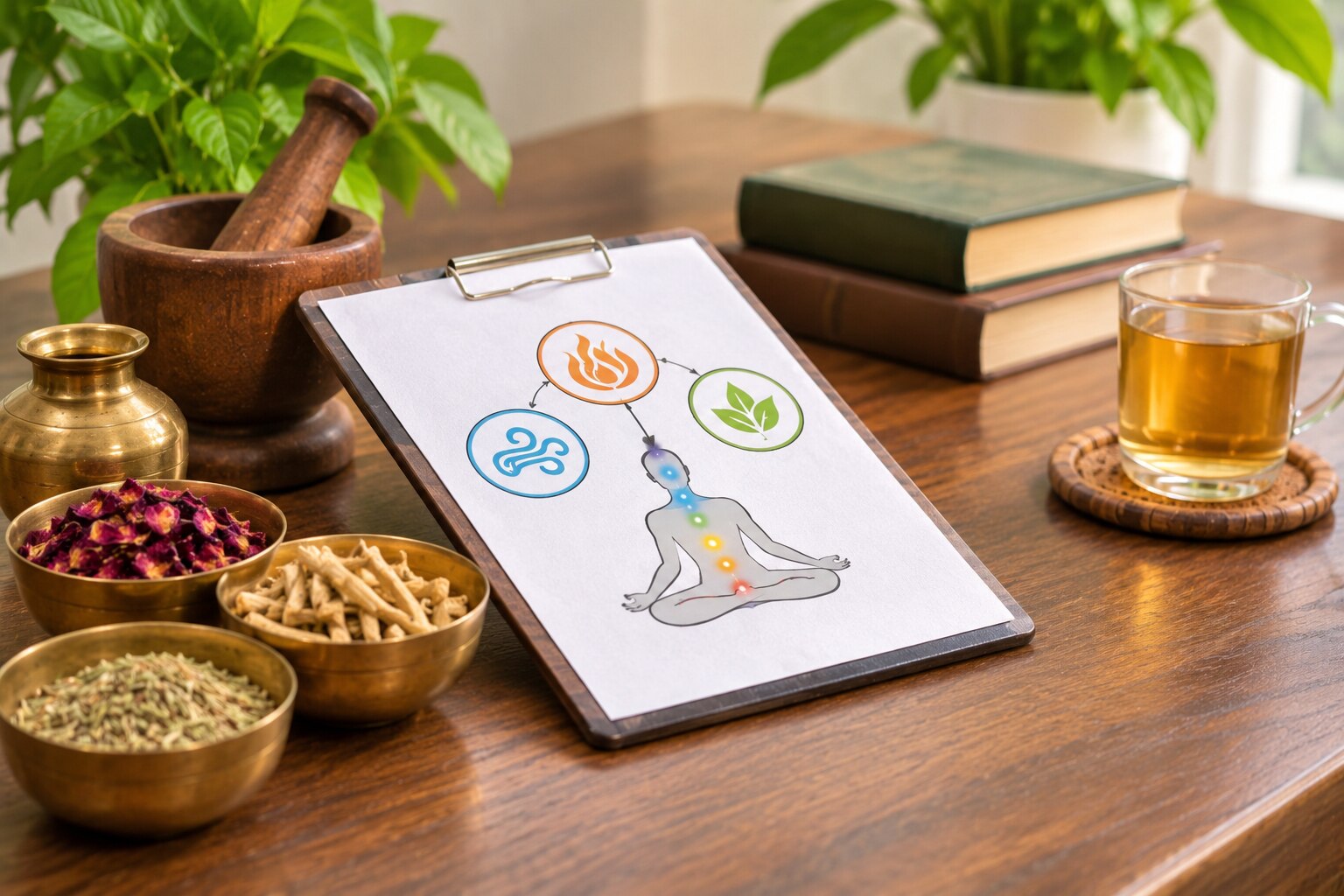
Two people with the same Prakriti may receive different meals because their current symptoms, routine, season, and nutritional needs differ. A practitioner combines the person’s constitutional pattern with Vikriti, the present imbalance, and Agni, the traditional description of digestive capacity, before turning those ideas into daily choices.
The reasoning may look like this:
- Prakriti: a long-term constitutional pattern used to guide food qualities, meal structure, and tolerance.
- Vikriti: current symptoms and changes that may prompt temporary adjustments.
- Agni: appetite, fullness, bloating, bowel response, and meal tolerance used to shape portions and timing.
- Dosha patterns: traditional patterns used to organise observations, not to diagnose diabetes, anemia, thyroid disease, or other medical conditions.
The final plan should name actual meals and behaviours rather than stop at “balance your dosha.” It might set a regular breakfast time, specify a portion of dal or eggs for protein, add vegetables and whole grains, plan a snack for a long work shift, and adjust spice, texture, or cooking method to improve tolerance.
Food preferences, budget, cooking access, medicines, and laboratory findings also determine whether the plan is workable.
Ayurvedic explanations of incompatible combinations, detoxification, or “toxins” are traditional doctrines, not established medical facts. If a plan removes dairy, grains, legumes, or several food groups, ask for nutritionally equivalent sources of calcium, iron, vitamin B12, iodine, protein, and energy before following it.
A restrictive plan also needs medical oversight when you have diabetes, kidney disease, celiac disease, an eating disorder, or unexplained weight loss.
The Daily Behaviours That Make Healthy Eating Sustainable
A consultation can turn “eat according to your digestion” into routines you can repeat on busy days. It can help you set meal timing, choose realistic portions, plan snacks, shop for suitable ingredients, and prepare food before hunger leads to rushed choices.
| Behaviour | Practical routine | Maintenance check |
|---|---|---|
| Regular meal timing | Set meal windows that fit work, sleep, and activity | Record skipped meals and energy changes |
| Portion awareness | Serve a planned amount before eating; adjust for hunger and activity | Notice fullness rather than finishing automatically |
| Protein and fibre | Add legumes, eggs, dairy or alternatives, vegetables, fruit, and whole grains | Check whether meals keep you satisfied |
| Hydration | Keep water available and create drinking cues around your day | Monitor thirst, urine colour, and exercise needs |
| Slower eating | Sit down, chew thoroughly, and pause during the meal | Rate fullness before taking more |
| Planned snacks | Keep simple options ready for long gaps between meals | Replace impulse purchases with prepared food |
| Meal preparation | Batch-cook staples and organise shopping around your plan | Track which steps are sustainable |
A practitioner can also help you log appetite, bowel habits, bloating, and energy without treating every symptom as proof of a food intolerance. The plan should preserve nutritional adequacy: restrictive rules that remove grains, legumes, dairy, or several food groups need suitable replacements and professional review.
Tradition can guide personalisation, but vegetables, fruit, whole grains, appropriate protein, and limits on added sugar, saturated fat, and sodium remain practical foundations.
How to Test, Track, and Safely Revise Your Diet Plan
Bring a three-day food diary to the consultation, including portions, meal times, drinks, snacks, and preparation methods. Add a symptom and bowel record with appetite, pain, reflux, stool frequency, diarrhoea, constipation, and sleep. Carry your medication and supplement list, laboratory reports, diagnoses, allergies, and food preferences.
1. Ask for a written trial plan. It should name each food or product, dose, duration, expected benefit, possible adverse effects, stop rules, and follow-up plan. At TRITATTVAM AYURVED, this record can help you and your other clinicians judge whether a recommendation is being used safely.
2. Change one or two habits at a time, such as regular meal timing or replacing a snack. Review energy, hunger, weight, bowel pattern, symptoms, and meal practicality after one to two weeks; do not treat temporary symptom relief as proof that every product is safe.
3. Seek medical or nutrition oversight before restricting dairy, grains, legumes, oils, or several food groups. Request replacement sources of protein, calcium, iron, vitamin B12, iodine, and energy, with dietitian advice or laboratory monitoring when needed.
4. Show every herb or mineral product to your physician or pharmacist, especially if you take anticoagulants, diabetes or thyroid medicines, immunosuppressants, or a narrow-therapeutic-range drug. Stop and seek medical assessment for unexplained weight loss, persistent vomiting or diarrhoea, blood in stool, severe abdominal pain, or significant nutritional restriction.
When Personalized Ayurvedic Advice Needs Evidence-Based Support
A personalized label does not replace nutrition assessment. An Ayurvedic consultation interprets Prakriti, Vikriti, Agni, meal timing, digestion, and daily routine through a traditional framework. A nutritionist may focus on general dietary guidance, while a registered dietitian uses nutrition science to assess nutrient needs, medical conditions, and calorie and protein planning.
| Appointment | Main focus | Safety boundary |
|---|---|---|
| Ayurvedic practitioner | Traditional patterns, food tolerance, routine, and individualized dietary practices | Separate Ayurvedic doctrine from claims supported by clinical research |
| Nutritionist | Nutrition education and eating-pattern guidance; qualifications vary by location | Confirm training before accepting treatment or supplement advice |
| Registered dietitian | Evidence-based nutrition care for disease, deficiencies, allergies, and therapeutic diets | Use this expertise when medical nutrition therapy or monitored restriction is needed |
Protect yourself with these checks:
- Do not accept a restrictive plan that removes dairy, grains, legumes, oils, or several food groups without replacement foods and monitoring for protein, calcium, iron, vitamin B12, iodine, and total energy.
- Tell the practitioner about food allergies, pregnancy, kidney or liver disease, diabetes, and every medicine and supplement you use.
- Treat herbal product safety as a medical issue: ask for the ingredient, dose, duration, expected benefit, adverse effects, stop rules, and interactions. Have a physician or pharmacist review products alongside anticoagulants, diabetes medicines, thyroid medicines, immunosuppressants, or narrow-therapeutic-range drugs.
- Prefer advice that also supports vegetables, fruit, whole grains, legumes, nuts or seeds, adequate protein, and limits on added sugar, saturated fat, and sodium. Ask for follow-up when symptoms, laboratory results, or weight change require reassessment.
Frequently asked questions
What does an Ayurvedic diet consultation examine before recommending food?
It examines your symptoms, digestion, appetite, bowel habits, sleep, daily routine, activity, medicines, allergies, medical history, health goals, and usual meals.
How does Ayurveda become an individual eating plan?
A practitioner interprets your clinical picture through Ayurvedic frameworks, then adapts food choices, meal timing, portions, preparation, and routines to your needs.
How can you make healthy eating habits sustainable?
Use simple meal routines, practical shopping and preparation habits, suitable portions, regular meal timing, and changes you can maintain alongside work and family life.
When should Ayurvedic diet advice include evidence-based medical support?
Get medical support for pregnancy, diabetes, kidney or liver disease, eating disorders, suspected deficiencies, prescribed medicines, severe symptoms, or symptoms that persist.
Keywords